
Vermilion Juvenile Release Authority
The Vermilion County Juvenile Detention Center is a county youth facility. Illinois official pages list the center and inspection framework, but county juvenile centers are not Illinois Department of Juvenile Justice institutions. Temporary secure detention is connected to a juvenile court matter. The court, facility, and authorized parties control the lawful flow of release information.
A youth may leave secure detention under a juvenile court order, move to another placement, return to an authorized guardian, or transfer within a lawful youth-services process. Public adult terms such as “released inmate” can blur those distinct outcomes. The relevant record is the confidential facility or juvenile court record available to the requester under law. A public sheriff roster, adult IDOC profile, or commercial name search cannot stand in for that record.
Confirm an Authorized Youth Release
Confirmation begins with the requester's legal relationship to the youth and case. A parent or guardian may need to verify identity and custodial authority. An attorney or court participant should use the case number and formal court channel. Other requesters need a clear legal basis or authorization. Staff may decline to confirm even that a child is or was held when confidentiality rules bar disclosure.
- Identify the juvenile court matter, the youth's lawful representative, and any case or order number already available through authorized records.
- Contact the facility or juvenile court using official county information. Explain the requester's role before asking about release, pickup, placement, or transfer.
- Follow identity, guardianship, attorney-appearance, or court-authorization checks required by staff.
- Ask which order or notice governs the youth's release and which authorized person may receive it.
- For a written record, ask the juvenile court or facility what confidential request process applies. Do not submit an adult booking-log request.
The adult search coverage on the Vermilion County release-record hub should not be applied to a juvenile matter. Its adult court, jail, photo, and offender-search routes have a different access basis.
Restricted Vermilion Youth Records
Juvenile confidentiality changes both the search path and the content that can be discussed. The Vermilion Circuit Clerk publishes adult and juvenile case codes. CF and CM identify adult felony and misdemeanor matters, while JA, JD, and J identify juvenile abuse, delinquency, and juvenile categories. Those youth codes are a warning not to treat the matter like an adult public criminal file.
A missing public docket or name result does not prove no case exists. It may reflect confidentiality, restricted access, sealing, expungement, system limits, or a search mismatch. Nor does a release from secure detention erase the juvenile case. The court's later orders, supervision terms, placement decisions, or closure process follow the law and facts of that case.
| Source | Adult use | Juvenile limit |
|---|---|---|
| County jail roster or release log | May address adult county bookings | Not a public youth-release workflow |
| IDOC offender search | State adult prison records | Not a county juvenile detention locator |
| Public court inquiry | Displays eligible adult case material | Youth cases may be restricted or absent |
| Facility or juvenile court | Not the usual adult public shortcut | Correct authorized contact route |
Vermilion Juvenile Center Contact
The county departments listing associates Juvenile Detention with the address below. Research directs publication to confirm current mailing details before relying on it. No verified public facility phone or public release-office hours were provided in the source set. Use the official county department listing or juvenile court to confirm current contact details instead of substituting the adult sheriff's general line as a youth release desk.
150 E. Sager Street
Danville, IL
Confirm current mailing details, phone, and authorized-contact hours through the county
The Illinois Department of Juvenile Justice county detention page explains and lists the county-center framework.
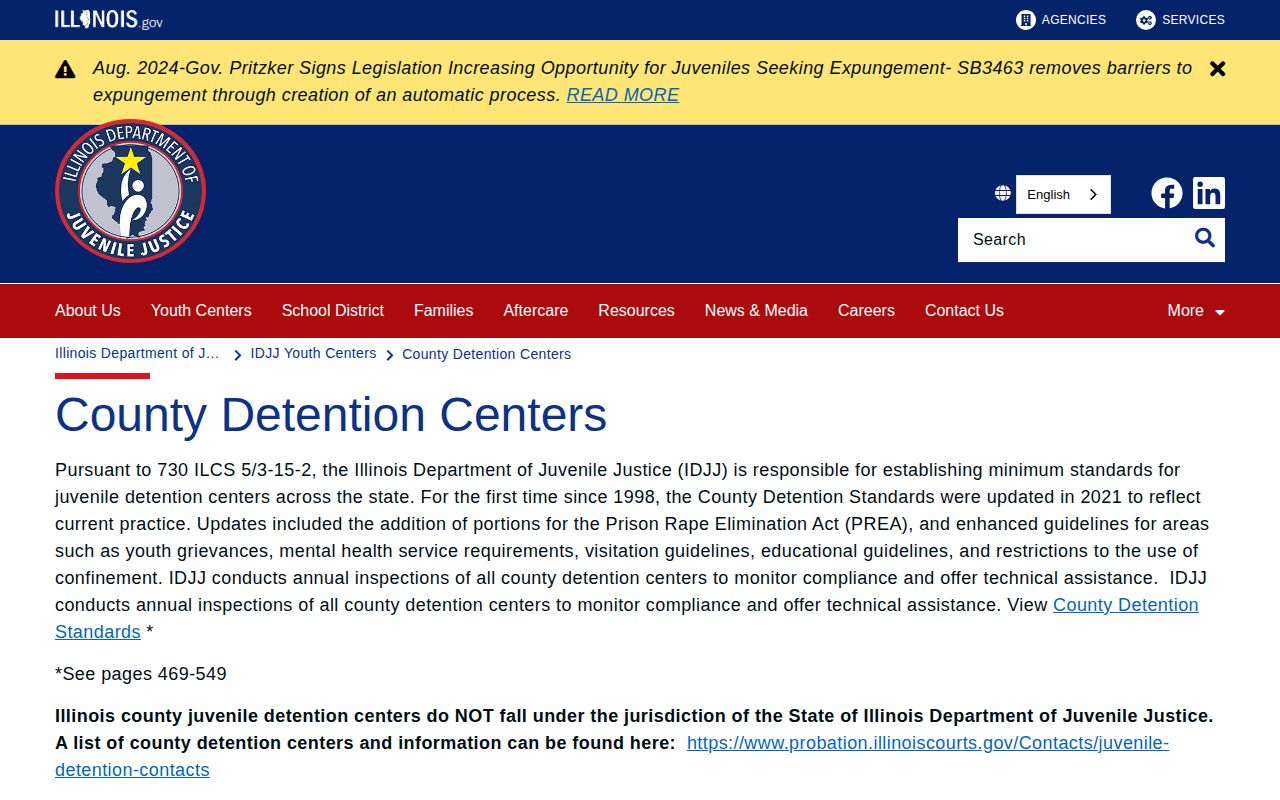
The state page confirms the regulatory distinction. It does not turn the Vermilion center into an IDJJ-operated facility or create a public youth locator.
Illinois Juvenile Detention Standards
Illinois maintains an official juvenile detention framework for county centers. The Illinois Courts juvenile detention overview supplies another official explanation of detention and oversight.
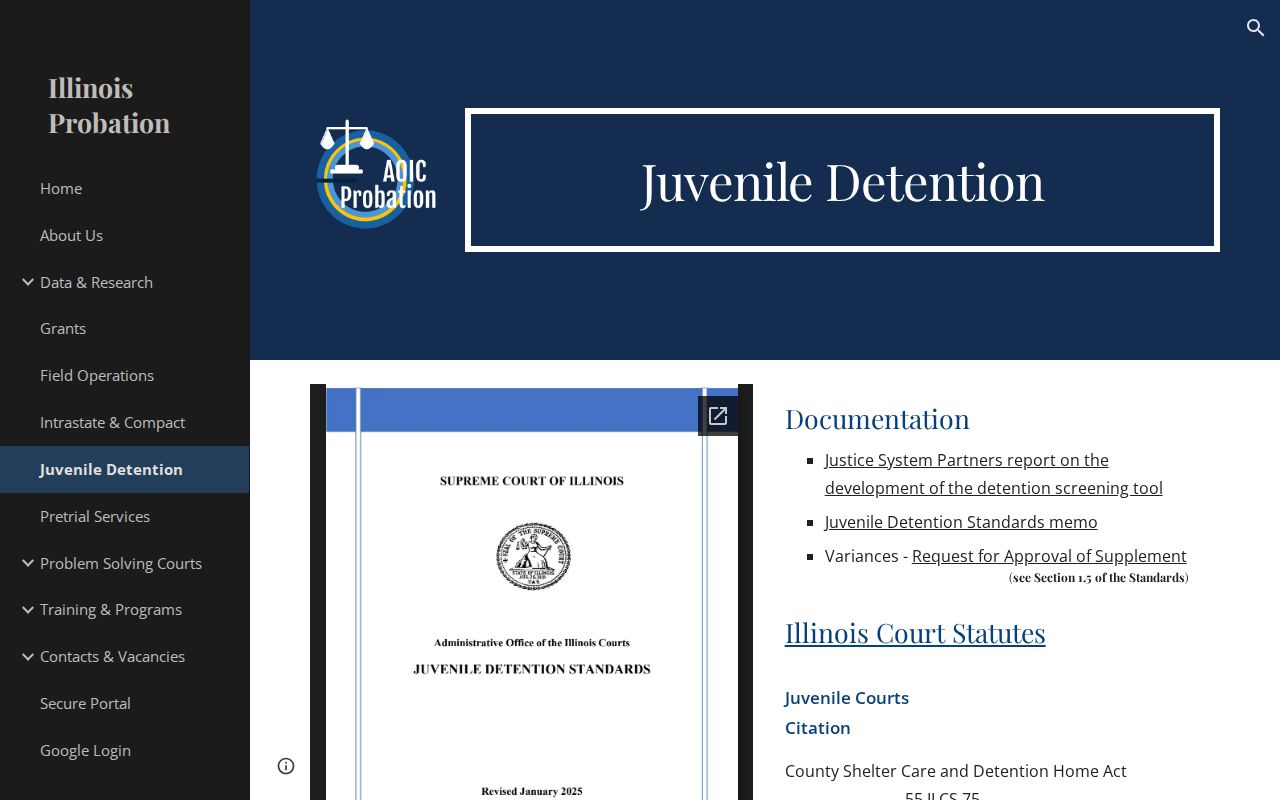
This source helps explain the youth detention system without exposing a child. It supports facility-level context, not person-specific release claims.
IDJJ listing or inspection does not mean IDJJ holds every youth in a county center. The county facility and juvenile court remain the relevant local channels. Likewise, the adult Illinois Department of Corrections search applies to adult state-prison custody, not temporary county youth detention.
Request Vermilion Juvenile Records
An authorized requester should ask the juvenile court or facility what process governs the specific document. Frame the request around the lawful need and the requester's relationship to the youth. Provide only the identifiers staff require to locate the case. A broad adult-style FOIA demand for booking sheets, release logs, and photographs is not appropriate for confidential youth records.
Possible materials include a release or placement order, notice to a guardian, authorized pickup direction, counsel's case document, or another confidential court or facility record. Availability depends on the requester's authority and the governing law. Staff may require in-person identity proof, filed attorney appearance, guardianship papers, a signed authorization, or a court order. Those checks protect the child and the proceeding.
Keep agency roles distinct. The facility documents secure detention and its own movement. The juvenile court issues and maintains judicial orders. Counsel receives case material through lawful representation. A service provider may hold only the placement information needed for its work. Sending one broad request to an unrelated county office does not create authority to receive all of those records.
- Authorized requester
- A person whose legal role or valid permission allows access to the specific youth information.
- Juvenile detention
- Temporary secure custody connected to juvenile court, not an adult jail sentence.
- Placement
- A court or youth-services destination that may follow detention and is not the same as unrestricted release.
- Confidential record
- Information whose access and disclosure are limited by law or court rule.
Keep Youth Off Adult Searches
The Vermilion sheriff's adult jail route, IDOC adult prison profile, booking-photo request process, recent-release searches, OffenderWatch registry, and public adult docket each serve a different legal purpose. None is a substitute for a confidential youth release confirmation. A registry entry also must never be used as proof that a child was recently detained or released.
Illinois VINELink is a custody-event and notification system, not a certified youth release record. County participation and person-specific coverage must be verified in the live system before any claim. Searching a child's identity merely to test a public interface would conflict with the privacy-centered path required here.
Federal and immigration locators are also unsuitable as default tools. ICE's public locator does not display minors, and BOP serves federal prison records. Those systems become relevant only if a lawful case participant has documented facts pointing to a federal authority, not as speculative searches for a youth.
About Vermilion Juvenile Detention
Vermilion County's youth center is structurally and legally separate from both the county adult jail and Danville Correctional Center. County operation under Illinois juvenile detention standards does not make it a state prison. Temporary detention tied to juvenile court does not create an adult conviction or public correctional profile.
Public information should remain at the facility level: operator, official listing, general role, and authorized contact route. Person-level details belong within the protected court and facility process. Do not publish names, images, allegations, release dates, pickup plans, or placement destinations. Even well-meant disclosure can expose a minor and interfere with privacy safeguards.
Release planning may involve safety, transport, education, treatment, guardianship, or placement terms that are not public. An authorized person should follow the exact order and staff instructions rather than infer a pickup plan from an adult jail routine. If two instructions conflict, contact counsel or the juvenile court. Public web research cannot resolve a confidential case direction.
If the listed address, phone, or procedure changes, rely on the current county and Illinois Courts pages. Ask staff only for information they may lawfully provide. That keeps the focus on safe release coordination and valid record access rather than public identification.
Note: A restricted or absent juvenile search result reflects access limits and cannot be treated as proof of release, transfer, or case closure.