
Vermilion County Release Dates Explained
A projected date is a calculation based on the sentence, governing law, credited custody time, and credits that have been awarded or may later be lost. It is not proof that someone walked out. Actual release occurs after the holding agency completes its process and resolves other warrants, detainers, court orders, transport, and administrative checks. The Vermilion County Sheriff's release or transfer entry is primary for a county booking. IDOC's actual parole or release status is primary for a state prison event.
A person held before trial usually has no sentence-based release date. The operative court order may authorize release, require detention, dismiss the case, or later change conditions. Even after an order, another case or hold can continue custody. The Vermilion Circuit Clerk docket explains the legal basis, while the jail record shows what the jail completed and when.
Find a Vermilion County Release Date
Start with the court and agency named in the record. Danville Correctional Center is an IDOC prison, not a county jail. A person sentenced there or elsewhere in IDOC uses the state search. A short county sentence at the Vermilion County Jail uses the court judgment and sheriff calculation. The adult workflow must not be applied to the confidential Vermilion County Juvenile Detention Center.
- Confirm the person's full name, case number, and custody system.
- For state prison, open the IDOC Individual in Custody Search and search by last name, IDOC number, or birthdate.
- Open the correct profile and record `Offender Status`, `Location`, and every parole or discharge field exactly.
- For a county sentence, obtain the judgment from the Vermilion Circuit Clerk search routes, then ask the sheriff which credit and release calculation applies.
- For a pending case, read the current court order and ask whether another hold prevents release.
- Confirm the actual event through the jail or IDOC rather than relying on the projection alone.
The Vermilion County release search provides the wider path when the holding system is uncertain. A county-to-IDOC transfer ends the local booking but continues confinement. Search IDOC after intake processing and keep the county transfer date separate from later prison parole and discharge dates.
Illinois Release Credit Rules
IDOC explains Statutory Sentence Credit as the share of a determinate sentence served under the law that governs the offense and conviction. Depending on those facts, the rate may be 50, 75, 85, or 100 percent. The simple 50-percent example in the IDOC FAQ cannot be applied to every sentence. Under 730 ILCS 5/3-6-3, applicable first-degree murder sentences require 100 percent, while specified violent offenses use an 85-percent rule. The precise subsection, offense, and date control.
Program Sentence Credit is described by IDOC as one-half day for each successfully completed day of qualifying programming, but people serving 100 or 85 percent are not eligible for that program credit. Earned Sentence Credit can reach up to 180 days, remains discretionary with the IDOC Director or designee, generally requires more than 60 days in IDOC, and has statutory exclusions. Eligibility is not an award. Credits can also be revoked for behavior.
The sound calculation begins with the judgment, sentence, and presentence custody credit. It then applies the offense-specific statutory rate, concurrent or consecutive sentence structure, credits actually awarded, revoked credits, and any new sentence or amended order. IDOC Records makes the official prison calculation. When an award changes a parole date, IDOC says it notifies the individual and updates the public profile.
The official sentence-credit provisions are visible in the Illinois correctional code article.
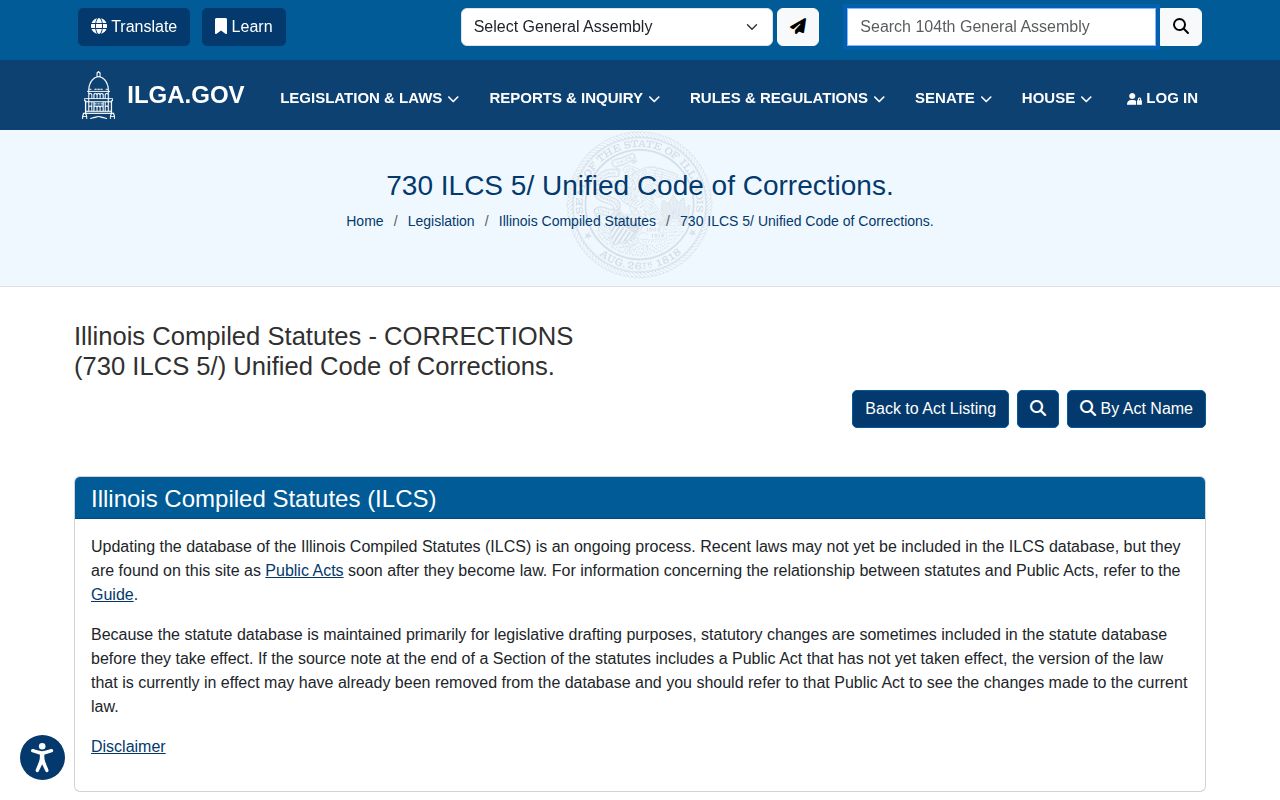
The statute supplies the governing framework, but the judgment and IDOC calculation determine how it applies to one person.
Why Vermilion County Release Dates Change
A projection can move before or after it appears online. Some changes alter sentence math. Others leave the sentence intact but delay departure from a particular facility. Record the stated reason and the agency responsible rather than treating every change as lost good time.
| Factor | Possible effect |
|---|---|
| Credit award or audit | An eligible, awarded credit or corrected calculation can move a projected parole date. |
| Disciplinary action | Loss or later restoration of credit may change the calculation. |
| Amended court order | A corrected judgment, custody credit, or sentence changes the official inputs. |
| New or consecutive sentence | Another term can extend the combined period. |
| Detainer or warrant | The person may leave one agency but transfer to another instead of entering the community. |
| Revocation | A violation process can return a supervised person to custody and alter later dates. |
| Record correction | IDOC may revise a displayed field after review. |
Old-law indeterminate parole and qualifying youthful parole use hearing tracks that differ from routine modern MSR. A hearing date is not a release date, and a grant can precede actual departure while conditions are resolved. Modern determinate MSR is generally calculated by IDOC rather than granted through an initial discretionary en-banc vote.
Confirm Vermilion County Release Dates
For a county booking, call the Vermilion County Sheriff at 217-442-4080 and ask whether the named booking is active, released, or transferred. Ask for the recorded date, time, and disposition. A purpose-neutral FOIA request can seek the booking sheet and release or transfer entry. The court docket can confirm a release order, dismissal, sentence, or IDOC commitment, but it does not prove the moment jail processing ended.
For state custody, preserve the IDOC number and every exact label. `Projected Parole Date` is not `Parole Date`; `Projected Discharge Date` concerns the anticipated later end of the correctional sentence. A `PAROLE` status means the person has left prison for supervision, not that the sentence is fully discharged. If a historical profile is missing, use IDOC's public information or records route because the live interface has no guaranteed permanent former-person archive.
The Vermilion County VINELink release check can supply an event alert, but VINE is not the certified jail or IDOC record. Save the reporting agency, event, and time, then verify the event at its source.
The Illinois Prisoner Review Board MSR explanation distinguishes supervised release from final discharge.
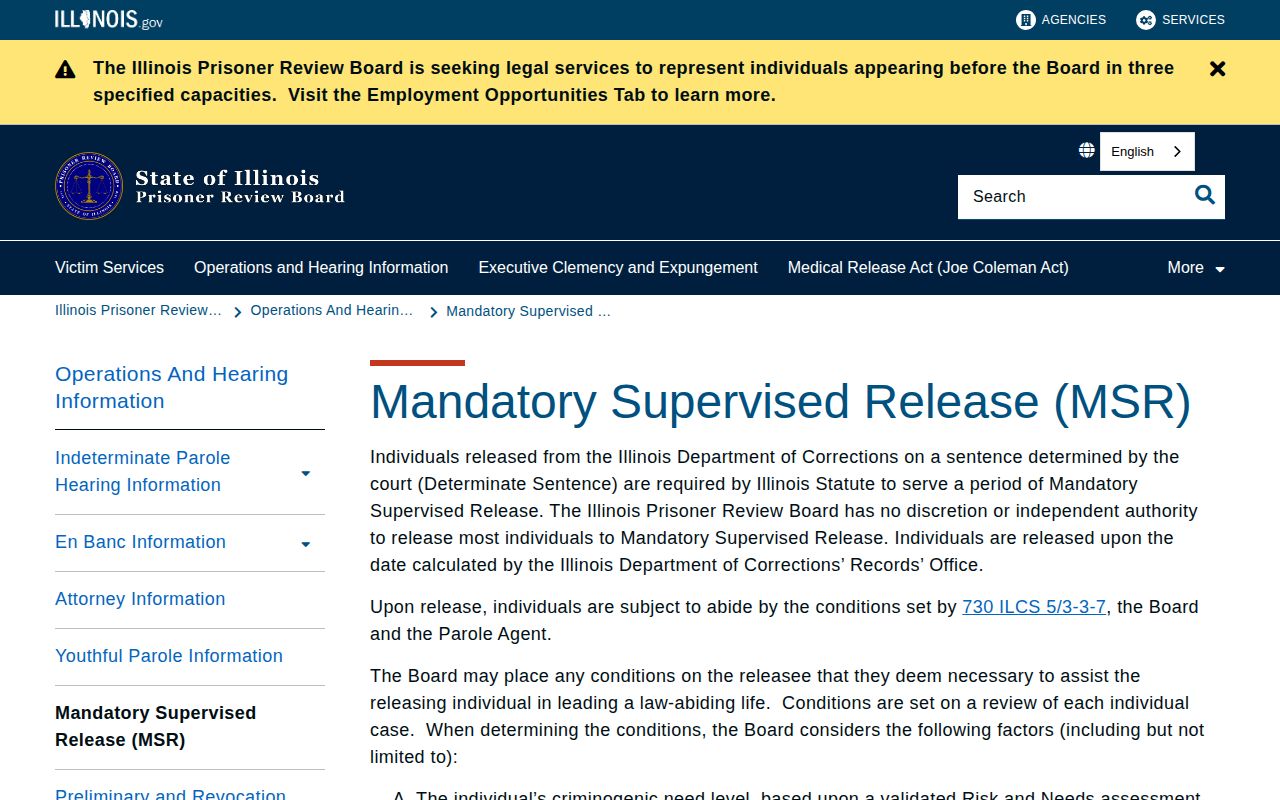
The state material helps interpret post-prison supervision, while the IDOC profile supplies the person's reported dates.
Vermilion County Jail Calculations
IDOC's prison-credit explanation should not be copied onto a Vermilion County Jail sentence. The court's sentence and custody-credit order, followed by the jail's own calculation under the controlling law and order, govern the county event. No Vermilion-specific published county good-time policy or weekend-release rule was located. That absence prevents a reliable generic formula.
Ask the jail for the calculation or the statute and order it used. If the anticipated date changes, request the revised calculation and identify whether the cause was an amended judgment, another hold, disciplinary credit issue, or simple administrative timing. Do not claim that releases occur at a set door, hour, or weekday because no official local procedure supports that statement.
Note: A county sentence projection does not override another warrant, detainer, transfer order, or confidential juvenile process.
Read IDOC Release Labels
IDOC profiles can present several dates at once. `Projected Parole Date` is an expected prison-release point for an applicable current sentence. `Last Paroled Date` records a prior parole event when shown. `Parole Date` identifies the reported supervision start. `Projected Discharge Date` marks the anticipated end of the correctional sentence if the record does not change. Some ineligible sentences display `INELIGIBLE` rather than a date.
The profile's `Parent Institution`, `Location`, and `Offender Status` add context. Location may show a prison or parole district. Parent institution is an administrative assignment. Search results should be matched through the IDOC number, name, birth information, and sentence case details rather than a name alone. A public projection is useful, but written IDOC confirmation is stronger when precision matters.
Vermilion Parole Hearing Tracks
Illinois release timing uses more than one legal lane. Most modern determinate sentences proceed toward mandatory supervised release through an IDOC calculation. Old-law indeterminate cases may require a discretionary Prisoner Review Board en-banc decision after eligibility. Some qualifying offenses committed by a person under age 21 use the separate youthful-parole framework in 730 ILCS 5/5-4.5-115. The sentence, offense date, and governing statute identify the correct lane.
A calendar entry merely shows that a hearing is scheduled. A result can grant or deny parole, and a denial may set a later hearing, but even a grant should be followed by IDOC's actual status and parole date. Conditions and other holds can matter between a decision and departure. The official indeterminate hearing explanation describes the old-law route.
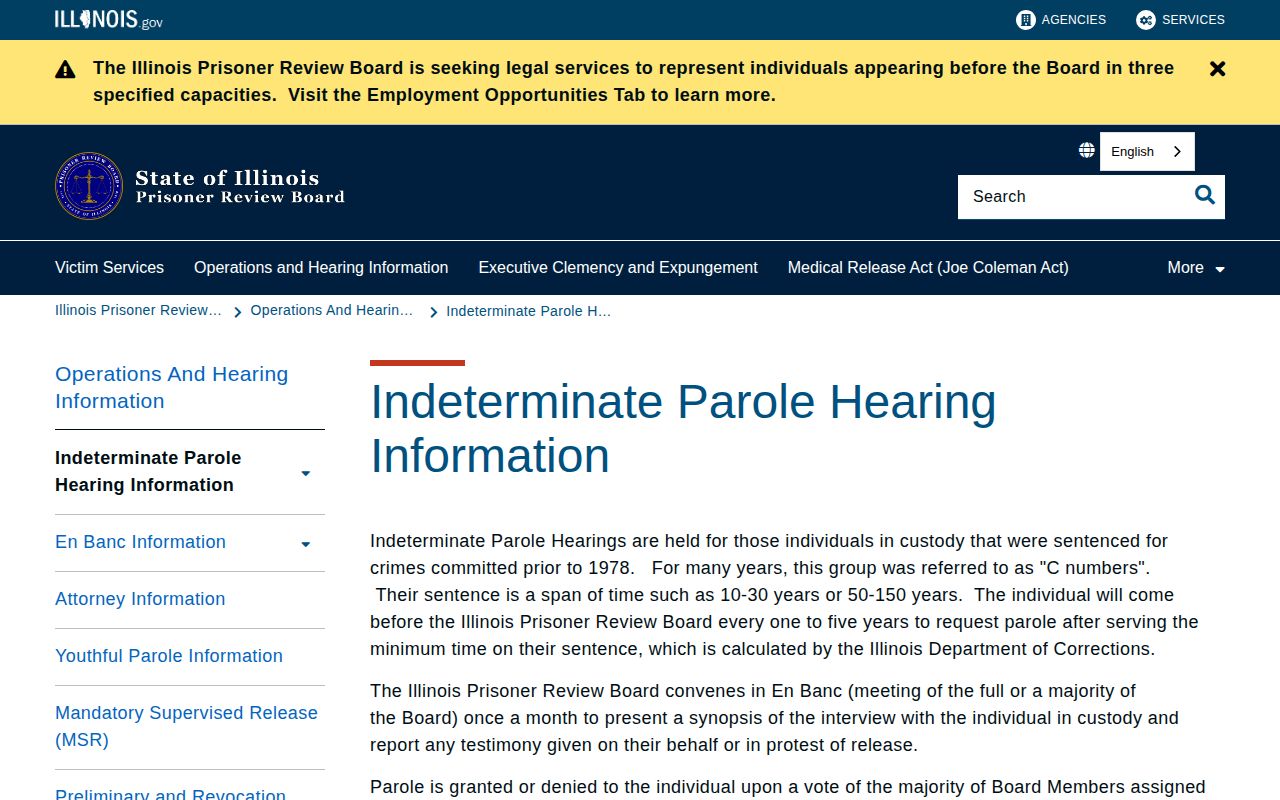
The hearing material is relevant only after the person's sentence has been placed in the correct statutory track.
Build a Vermilion Release Timeline
One unlabeled “release date” cannot hold every stage. Create separate entries for the judgment date, sentence start, presentence credit, projected parole date, court release order, sheriff release or transfer, IDOC admission, actual parole or MSR, and final discharge. Include the source and agency beside each entry. The result makes apparent conflicts easier to explain.
For example, a county transfer date followed by an IDOC admission date means custody continued. A parole date followed by a future projected discharge date means prison custody ended but state supervision did not. A court order followed hours later by a sheriff release time reflects legal authorization followed by jail processing. None of those pairs should be collapsed into the earlier date.
If an agency changes a field, preserve the prior copy and request the corrected record. The sheriff cannot correct a court judgment, the Circuit Clerk cannot rewrite IDOC sentence math, and VINE cannot certify another agency's record. Direct the correction to the custodian of the disputed field.
Written Vermilion Date Confirmation
When an online profile is unclear, request the public fields from the correct custodian. IDOC's FAQ says the department may disclose a current or former person's name, IDOC number, parent institution, current location or status, vital statistics, admission and release dates, and sentencing information. A focused IDOC request can seek admission, parole, release, discharge, status, and sentence data without assuming that confidential material will be produced.
For the county jail, identify the name, approximate booking and release dates, and the Vermilion County Jail / Public Safety Building. Ask for the booking sheet and the release, discharge, or transfer screen or log entry. Include the recorded date, time, disposition, and receiving agency when releasable. A no-record response should lead to a spelling, alias, custodian, and retention check rather than a claim that release occurred.
For the court, use the Circuit Clerk's judicial record route instead of county FOIA. The judgment supplies sentence terms and custody credit, while later orders may amend them. Certified copies may be appropriate when the exact legal date must be established. Each agency can certify only the record it maintains.